
The Ultimate Guide to Gemstone Settings: Which Style is Right for You?
From the classic Prong to the modern Bezel, discover the pros and cons of the top 8 setting techniques to protect your sparkle.

When shopping for fine jewelry—especially an engagement ring or a daily-wear pendant—most people focus entirely on the stone. They obsess over the Diamond Cut or the Moissanite’s fire. But there is an unsung hero that determines both the beauty and the longevity of your piece: The Setting.
The setting is the metal architecture that holds your gemstone in place. Choose the right one, and your stone will look larger and stay secure for decades. Choose the wrong one for your lifestyle, and you might face snagged sweaters or, worse, a lost stone.
At Laramour, our 13 years of custom craftsmanship have taught us that the setting is the style. Here is a breakdown of the most popular gemstone setting techniques, their pros and cons, and how to choose the perfect one.


This is the most iconic and popular setting in the world (think Tiffany style). It uses small metal claws (prongs) to grip the diamond, lifting it high above the band.
- How it works:Typically uses 4 or 6 prongs to hold the stone like a basket.
- The Look:Timeless, elegant, and focused entirely on the stone.
Pros:
- Maximum Sparkle:Allows the most light to enter the stone from all angles.
- Easy to Clean:You can easily reach the back of the stone.
- Cost-Effective:Uses less metal than other settings.
Cons:
- Snagging Risk:High-set prongs can catch on clothes or hair.
- Maintenance:Prongs can wear down or loosen over years of daily wear.

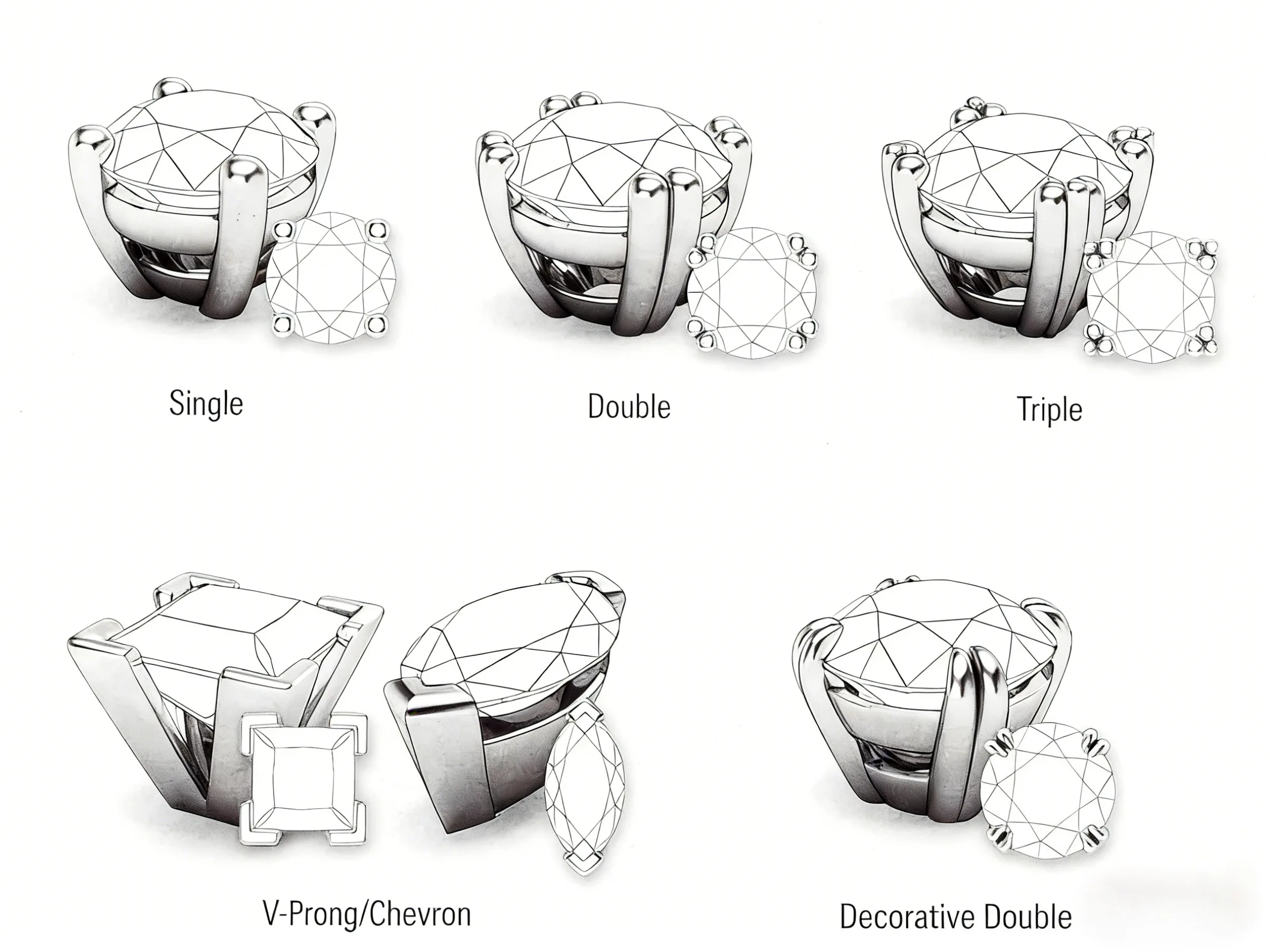


Also known as: Rub-Over Setting
The bezel is the oldest and most secure way to set a stone. Instead of claws, a custom-fitted metal rim surrounds the entire perimeter of the gemstone.
- The Look:Sleek, contemporary, and smooth.
Pros:
- Ultimate Security:The stone is completely protected from side impacts.
- No Snags:A smooth surface means it will never catch on your sweater.
- Hides Flaws:Can cleverly hide chips on the edge of a vintage stone.
Cons:
- Less Light:Because the sides are covered, the stone may sparkle slightly less than in a prong setting.
- Visual Size:Can sometimes make the stone appear slightly smaller (though it adds visual width).
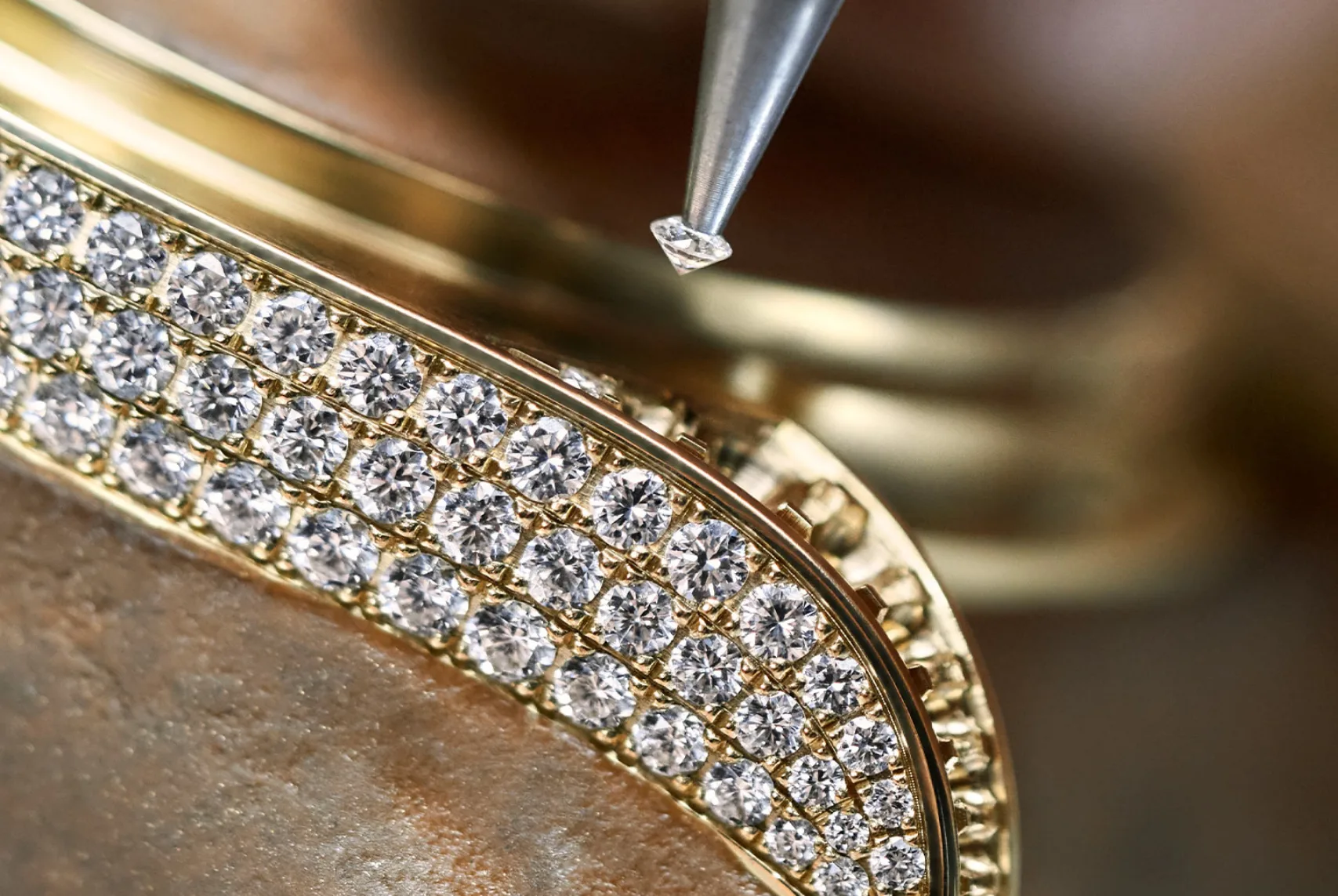
Pronounced: Pa-vay (French for "paved")
This technique involves setting many tiny diamonds closely together, held by microscopic beads of metal. It creates the appearance of a surface "paved" with diamonds.


- The Look:Continuous, glittering brilliance.
Pros:
- Extra Bling:Adds immense sparkle to the band without needing a huge center stone.
- Delicate:Creates a very fine, vintage, or romantic aesthetic.
Cons:
- Sizing Issues:Rings with full pavé bands are very difficult to resize.
- Delicate:Tiny stones can occasionally fall out if the ring is hit hard (though easily replaced).
4. The Floating Illusion: Tension Setting


A feat of engineering. The gemstone is held in place by the pressure of the metal band squeezing it from two sides, with no metal underneath.
The Look:Futuristic, bold, and seemingly magical (the stone looks like it's floating).
Pros:
- 360-Degree View:You can see the entire diamond, including the bottom tip (culet).
- Light Play:Allows huge amounts of light to pass through.
Cons:
- Hard to Resize:The metal tension is calibrated precisely; resizing is often impossible.
- Security:While safe, if the ring receives a massive blow, the tension could shift.
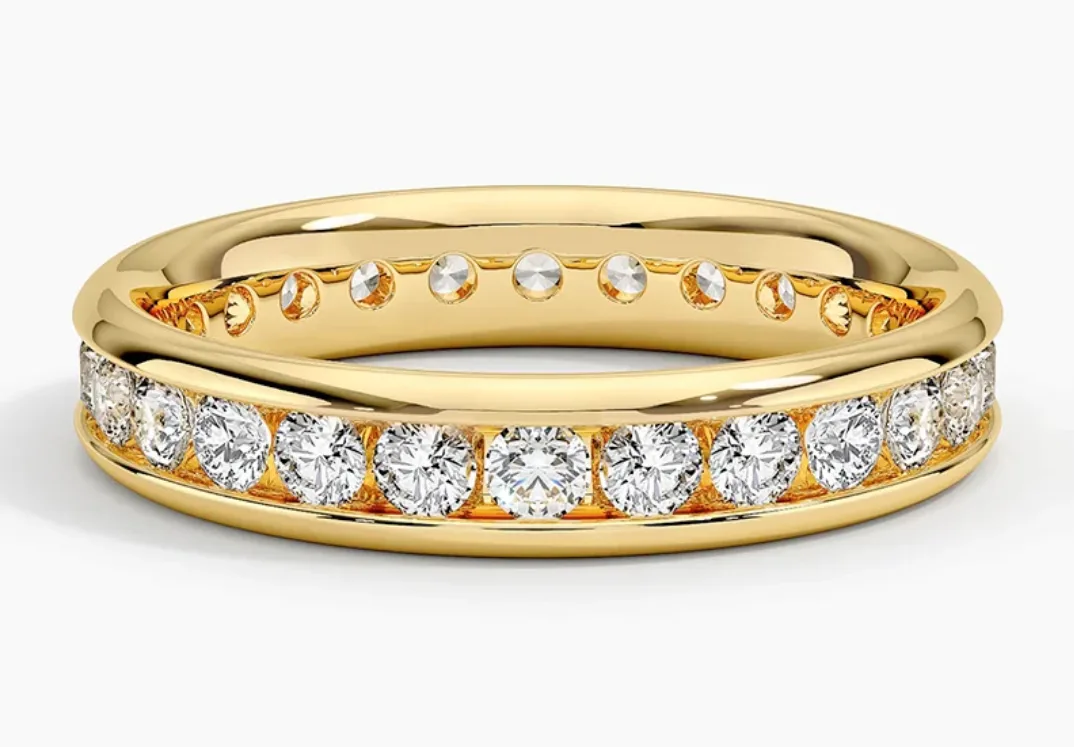
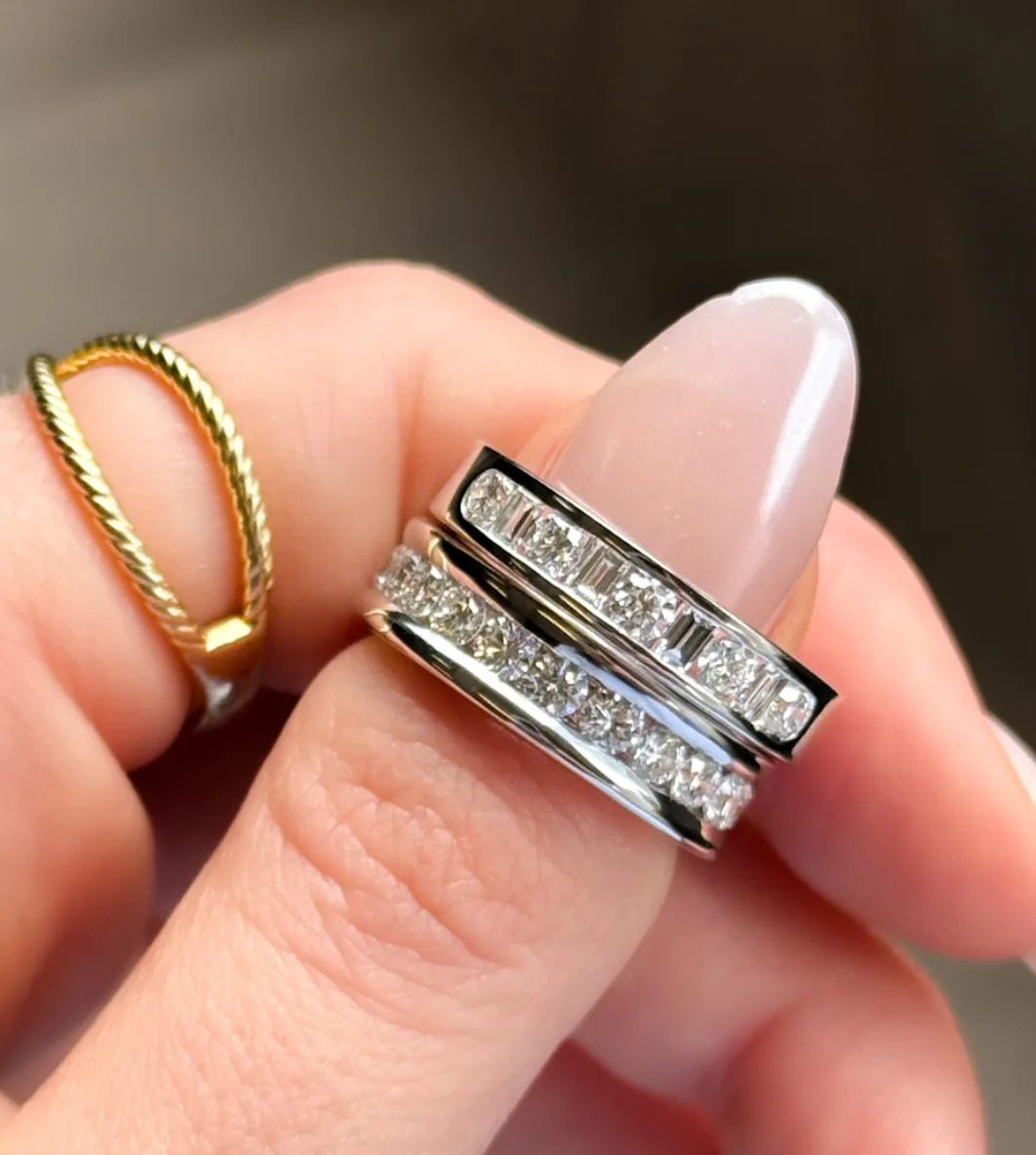
Diamonds are set in a row between two walls of metal strips, with no prongs between the individual stones.
Pros:
- Durability:Excellent protection for the stones' edges (girdles).
- Smooth:Perfect for active lifestyles as there are no prongs to catch.
Cons:
- Hygiene:Dirt can get trapped in the channels and can be harder to clean out than prong settings.
- Rigidity:Not as flexible for design variations.


A central gemstone is surrounded by a "halo" of smaller accent diamonds (usually micro-pavé).
- The Look:Grand, romantic, and eye-catching.
Pros:
- Size Illusion:Can make a center diamond look up to 0.5 carats larger than it actually is.
- Protection:The halo acts as a buffer, protecting the main center stone from knocks.
Cons:
- Maintenance:More small stones mean more potential for a loose accent stone over time.
- The Flush Setting


Also known as: Gypsy Setting
The diamond is sunk into the metal band so that the top of the stone is flush with the surface of the ring.
- The Look:Masculine, minimalist, and understated.
Pros:
- Indestructible:The safest setting for heavy-handed wearers (great for men’s wedding bands).
- Low Profile:Zero height, making it incredibly practical.
Cons:
- Reduced Visibility:You don't see the side profile of the gem, and less light enters, reducing fire.


Diamonds are set between vertical metal bars, leaving the sides of the stones exposed. It is similar to a channel setting but with a different rhythm.
Pros:
- Light Entry: Allows much more light into the stones than a channel setting.
- Design: Creates a stunning "floating" effect suitable for stackable bands.
Cons:
- Protection: The top and bottom edges of the stones are exposed, offering slightly less protection than a bezel or channel.


A variation of the pavé setting, but with a twist. The metal on the sides of the band is scooped out in "U" or scallop shapes.
- The Look: Airy, delicate, and incredibly brilliant.
Pros:
- Maximum Brilliance: By removing the side metal, light hits the diamonds from the sides, not just the top.
- Minimal Metal: From the top, you see almost nothing but diamond.
Cons:
- Exposure: The girdles (edges) of the diamonds are more exposed, making them slightly more prone to chipping than channel settings.
10. The Vintage Illusion: Fishtail setting


An elaborate setting technique often used in vintage jewelry. The metal is cut into "V" shapes that resemble the tail of a fish, holding the diamond in place.
- The Look: Art Deco, intricate, and bold.
Pros:
- Size Illusion: The V-shaped metal corners can make round diamonds appear square (like a Princess cut) and larger than they are.
- Sparkle: The faceted metal adds extra flash to the stones.
Cons:
- Texture: If not polished perfectly, the "tails" can feel slightly sharp or catch on delicate fabrics.
- The Antique Touch: Milgrain Setting
Technically a decorative detail applied to settings


"Milgrain" means "a thousand grains." It refers to tiny beads of metal applied along the edges of a setting (often on Bezel or Channel edges).
- The Look: Antique, heirloom, and soft.
Pros:
- Vintage Charm: Instantly gives a ring an "Edwardian" or "Art Deco" feel.
- Camouflage: The textured edge hides scratches and dings on the metal better than a high-polish finish.
Cons:
- Wear: The tiny beads can wear smooth after decades of daily use (though they can be restored by a jeweler).
- The Magic Trick: Invisible Setting

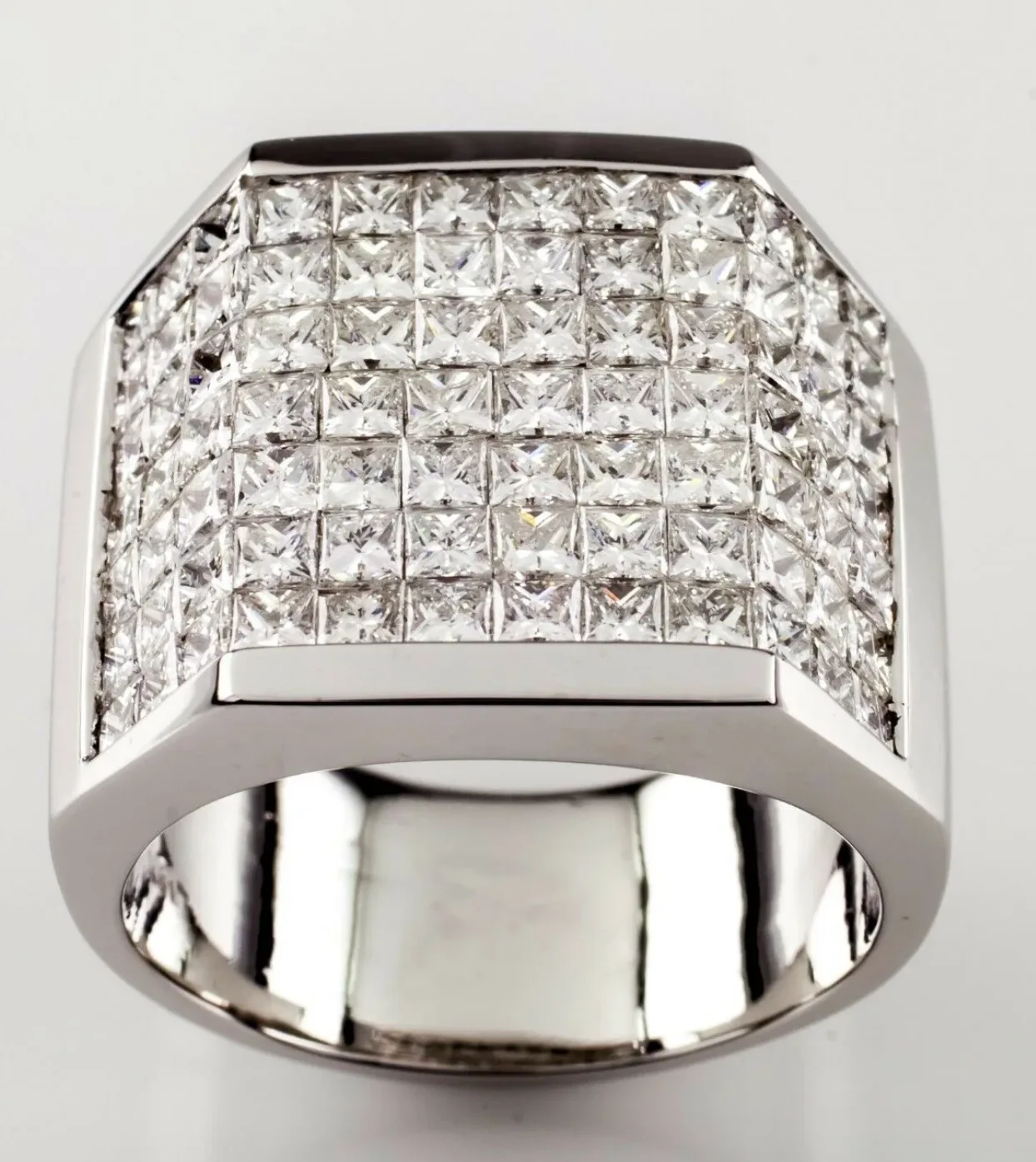
A highly complex technique where stones are set side-by-side with no visible metal holding them from the top. The stones (usually square or rectangular princess/emerald cuts) are grooved just below the girdle and snapped into a hidden metal grid underneath.
- The Look: A seamless, uninterrupted surface of gemstone that looks like solid diamond.
Pros:
- Pure Color: Because there is no metal between the stones, you see nothing but the color and sparkle of the gems.
- Illusion: Can make multiple smaller stones look like one massive gemstone.
Cons:
- Risk: It is widely considered the most fragile setting. If the ring is bent or resized, the hidden grid can warp, causing stones to pop out.
- Repair Difficulty: Very few jewelers have the skill to repair invisible settings; often, the entire section must be remade.
Which One Should You Choose?
- For the "Active Lifestyle" (Gym/Doctors/Parents):Go for Bezel or Flush settings. They won't scratch babies or get caught on gym gear.
- For the "Maximum Sparkle" Lover:Prong, Scallop, fishtail or Halo is your best bet.
- For the "Modern Minimalist":Bar, Tension or Channel settings offer those clean lines you love;
- For Vintage Lovers: Milgrain and Fishtail settings are your best friends for that "heirloom" vibe.
At Laramour, we offer the freedom to customize. Found a ring you love but want to switch from Prongs to a Bezel for durability? We can do that. With 13 years of manufacturing experience, we know how to build settings that last a lifetime.
Ready to find your perfect fit? [Explore Our Ring Collections]

